Nathan Gardener of NRG Pilates said something rather brilliant the other day that got me thinking.
Good movement teachers are just that: teachers, coaches, not simply instructors.
An instructor can deliver a prescribed routine. Here’s the choreography, here’s the exercise, here’s the movement we’re going to do.
And there’s absolutely a place for that. It’s an approach we see in many of the increasingly popular reformer studios, where clients come to enjoy a structured, choreographed class.
But I’m particularly interested in the teachers and coaches who take that choreography, that method, that collection of exercises, and apply it to the person standing in front of them.
They might say, “Yes, this is the idea, this is the method, this is the plan. But now I’m going to look at the person in front of me and work out how we can move forward together.”
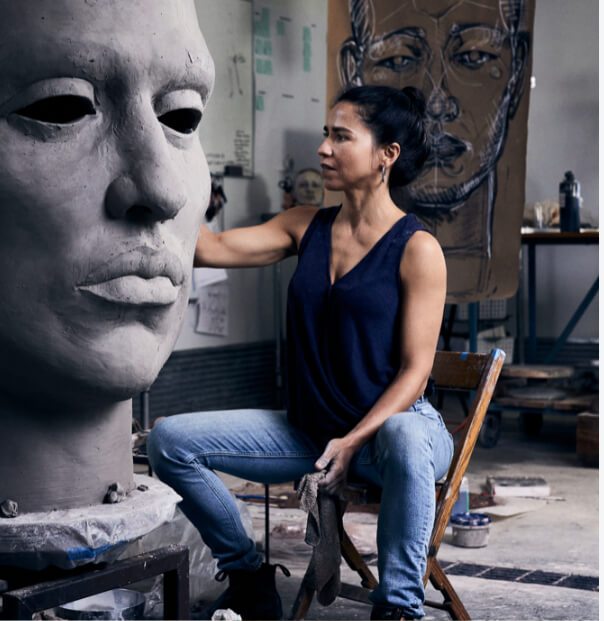
These teachers are sculptors. But unlike traditional sculptors, they’re working with living, sentient beings!
Their material has thoughts, feelings, opinions, preferences and experiences of its own. And that makes the creative process rather more interesting.
I suspect there are many, many movement teachers who would love to work in this way.
But here’s what I’ve been wondering.
Are we actually helping them develop those skills?
We have wonderful courses that teach us more about anatomy, biomechanics, conditions, contraindications and movement methodologies. All enormously valuable.
But once we’ve acquired that knowledge, how much time do we spend learning to use it creatively?
How often are we encouraged to take what we already know, question our habitual approaches, experiment with different possibilities and collaborate with the person we’re teaching?
And when we’re learning about particular client groups, such as people with hypermobility or neurodivergence, are we sometimes given more information about what to do — or what not to do — without enough opportunity to explore how to adapt our teaching?
I’m increasingly interested in that space between knowledge and application.
Because knowing an exercise is one thing.
Knowing how to adapt it to the person in front of you is quite another.
And perhaps that’s where some of the most interesting teaching happens.
So here’s my question to fellow movement teachers:
When was the last time you attended a course that challenged you to think creatively with the tools you’d already been given?